
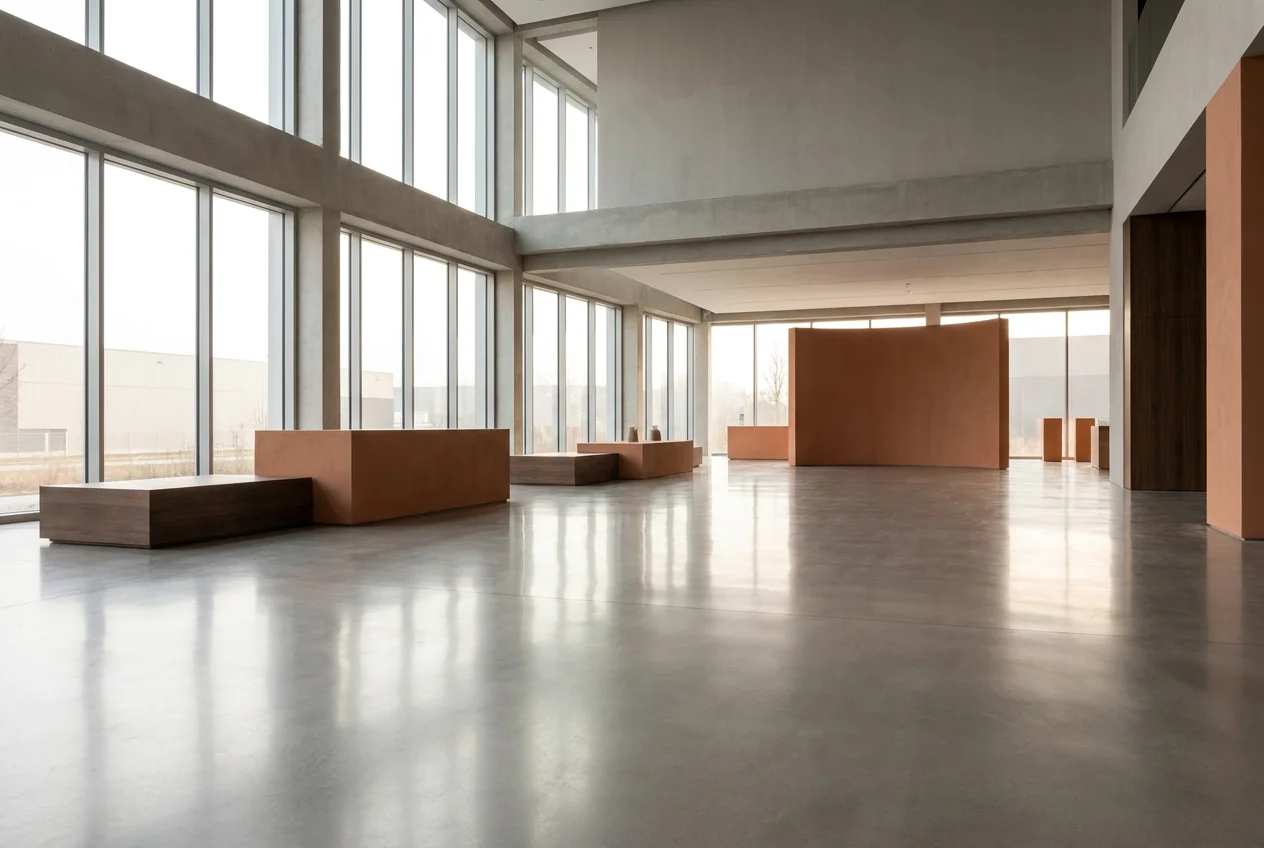
No two slabs behave the same way once the first diamond pass opens the surface, so the quickest route to a straight answer from us is a short description of what you are standing on.
Tell us the approximate square footage, roughly when the slab was poured, and what the space has to do for a living. A garage that takes hot tires, a showroom that needs a mirror reflection under the lights, a warehouse aisle that simply has to stop dusting — each of those points to a different grit sequence and a different densifier schedule. If there is old carpet glue, tile thinset, mastic or a failing epoxy coating sitting on the concrete, say so: removal usually moves the estimate more than the polish level itself.
What helps us answer quickly
- Square footage, and whether the room can be cleared for the crew.
- Slab age and condition: control joints, saw cuts, cracks, spalling, patched trenches.
- Exposure you want — cream polish, salt and pepper, or full aggregate.
- Target gloss, or the grit level you have seen quoted elsewhere: 800, 1500, 3000.
- Color work, if any: water based dye, acid stain, or natural gray left alone.
- Whether a lithium densifier and stain guard should be included in the price.
- Your timing, and any trades that still have to finish before we can start.
Photos are welcome once we have replied. A wide shot of the room plus a close-up of the surface settles most of the guesswork about how much grinding the concrete really needs, and it lets us quote a firm number instead of a range.
Messages reach the estimating desk directly and are answered in writing, normally within one business day. Reviewing a floor and putting a figure on it costs nothing, and we will tell you plainly if a slab is not a good candidate for polishing rather than sell you a finish it cannot hold.
Send us the details
Every message is read by the crew that would run your floor. We reply by email.